
By Dan Alexander, Yard Manager13 min read
The short version
Soil wetter helps water soak into water-repellent Perth sand. How to tell if you need it, when to apply it, how much to use and what it won't fix. A soil wetter, also called a soil wetting agent, helps water soak into soil that has become water repellent. It works by reducing the surface tension of water, allowing moisture to spread through the soil instead of beading on the surface, running away or travelling down a few narrow channels.
What this covers
- What is a soil wetter?
- Why does soil become water repellent?
- Why soil wetters are particularly useful in Perth
- How can you tell if your soil needs a wetting agent?
- When should you use a soil wetter?
- What is the best time to apply soil wetter in Perth?
Summarise this with AI
A soil wetter, also called a soil wetting agent, helps water soak into soil that has become water repellent. It works by reducing the surface tension of water, allowing moisture to spread through the soil instead of beading on the surface, running away or travelling down a few narrow channels.
That makes soil wetters particularly useful in Perth, where sandy soils can become hydrophobic and difficult to re-wet. If your lawn has stubborn dry patches, your garden beds shed water, or water runs straight through the sides of a dried-out pot, a soil wetter may be the right first step.
The important part is working out whether water repellence is actually the problem. A soil wetter can improve how water enters hydrophobic soil, but it cannot fix poor irrigation coverage, severe compaction, nutrient deficiencies or every problem associated with sandy soil.
What is a soil wetter?
A soil wetter is a product containing a surface-active ingredient known as a surfactant.
Normally, water molecules are strongly attracted to each other. This creates surface tension and is part of the reason water can form beads or droplets. A wetting agent reduces that surface tension, making it easier for water to spread across and penetrate a surface.
In the garden, this helps water move into soil that would otherwise repel it.
Think of the difference between pouring water onto a clean sponge and pouring it onto a waxed surface. The sponge accepts the water. The waxed surface causes it to bead and move elsewhere. A wetting agent helps water move past that water-repellent behaviour.
Water-repellent sand
A waxy coating on the grains makes water bead on top and run off to the side.
After a soil wetter
Water spreads over the grains and moves down through the gaps towards the roots.
Soil wetters are available in different forms, including liquids and granules. The correct rate and reapplication schedule depend on the product, so you should always follow its directions rather than assuming every soil wetter works the same way.
Why does soil become water repellent?
Water-repellent soil is usually described as hydrophobic soil.
Hydrophobic means that the soil resists wetting. Instead of moisture spreading evenly through the soil profile, water can sit on the surface, run away or follow isolated pathways through the ground.
This is particularly common in sandy soils.
Organic compounds produced during the natural breakdown of plant material can form water-repellent coatings around soil particles. Coarse sandy soils are particularly susceptible because they have a relatively low surface area compared with finer-textured soils.
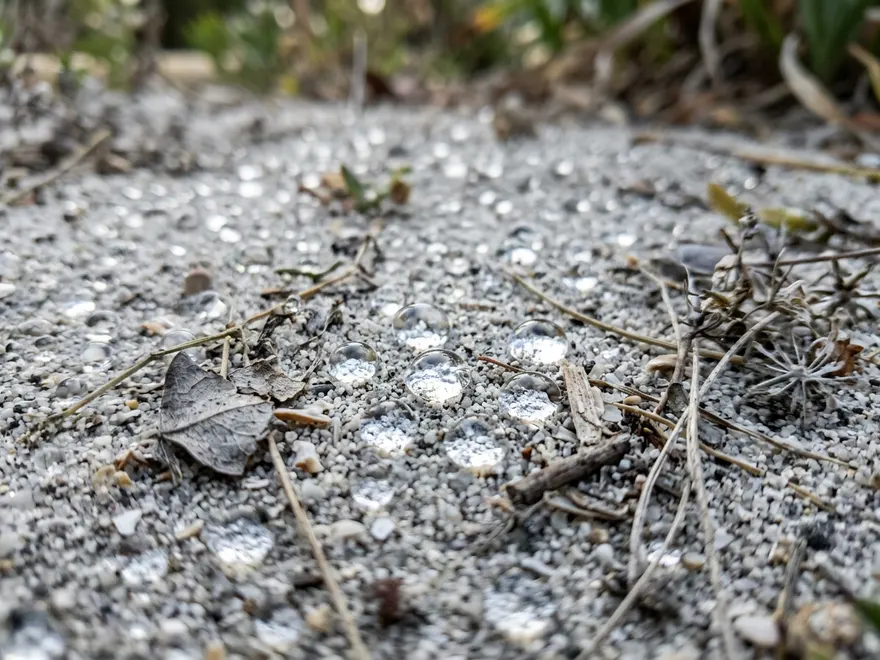
The result can be surprisingly patchy.
One section of lawn may remain green while another section becomes dry and stressed even though both areas receive irrigation. A garden bed may look wet at the surface while the root zone remains dry. In pots, water may travel down the gap between the potting mix and the container rather than soaking through the mix.
These problems can become more noticeable after soil or potting mix has dried out for an extended period.
Why soil wetters are particularly useful in Perth
Perth gardeners have to deal with a combination of sandy soils and long periods of warm, dry weather.
Water Corporation identifies water repellence as a common problem in Western Australian sandy soils and recommends wetting agents as one way to improve water absorption and encourage moisture to spread more evenly through the soil.
That matters because watering for longer does not necessarily solve water repellence.
If the soil is rejecting the water, adding more water may simply create more runoff or push moisture through the same narrow channels. You can end up using more water without properly wetting the root zone.
A soil wetter tackles the way the water interacts with the soil rather than simply increasing the amount of water applied.
How can you tell if your soil needs a wetting agent?
Do not apply a soil wetter simply because the lawn or garden looks dry. First check whether water repellence is actually contributing to the problem.
Common signs include:
- Water forming beads or pools on dry soil instead of soaking in.
- Water running across a garden bed during relatively light watering.
- Lawn patches remaining dry while surrounding areas receive the same irrigation.
- Soil beneath the surface staying dry after watering.
- Water running down the sides of pots and quickly appearing from the drainage holes.
- Dried potting mix shrinking away from the side of its container.
- Some sections of the garden accepting water normally while others repel it.
A simple test can help.
Take a small amount of dry soil from the problem area and place it in a container or make a small depression in the ground. Add a little water. If the water beads or remains sitting on the surface rather than readily soaking in, water repellence may be part of the problem.
This type of simple water-drop test is also used as a basic way of demonstrating hydrophobic soil.
Check your reticulation first
A dry patch does not automatically mean you have hydrophobic soil.
Run your reticulation and watch the affected area. Check whether sprinklers are actually reaching it and whether the spray pattern is even.
A blocked nozzle, damaged sprinkler, incorrect sprinkler height or poor overlap can produce a dry patch that looks very similar to water-repellent soil.
If no water is reaching the area, adding soil wetter will not fix it.
Quick check: is a soil wetter the right fix?
Run the reticulation. Does water reach the dry patch evenly?
Yes: Go to step 2.
No: Fix the sprinkler coverage first. A soil wetter will not help an area the water never reaches.
Drip water onto a little dry soil from the patch. Does it bead or sit on top?
Yes: Water repellence is likely, so a soil wetter is worth trying.
No: Go to step 3.
Does the soil wet properly but dry out again quickly?
Yes: The sand is not holding water. Look at bentonite clay, compost and mulch.
No: Check for compaction, poor drainage or a feeding problem before buying a product.
When should you use a soil wetter?
A soil wetter is most useful when the underlying problem is poor water penetration.
On a water-repellent lawn
Dry patches are one of the most common reasons people use soil wetters on lawns.
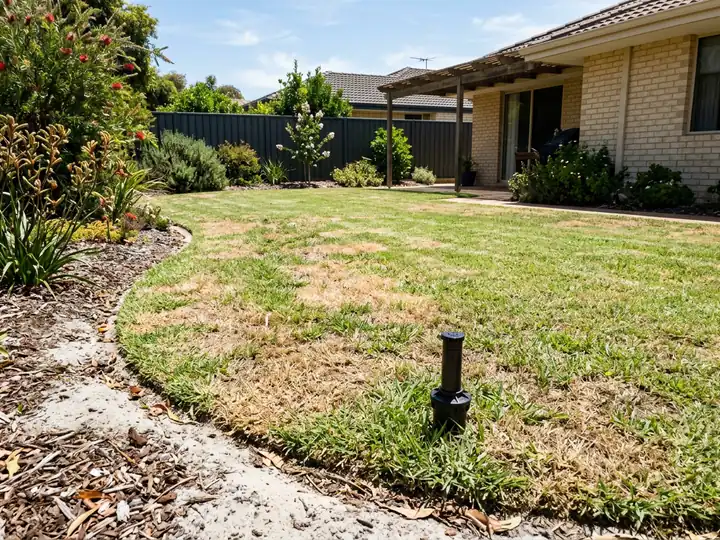
If your irrigation coverage is working but certain areas remain unusually dry, inspect the soil beneath the grass. If water beads or fails to penetrate evenly, applying a suitable lawn wetting agent can help water reach the root zone more effectively.
This can be particularly useful heading into Perth's warmer months, when the lawn is increasingly dependent on the water reaching the right place.
In sandy garden beds
Water-repellent garden beds can make irrigation frustrating.
You may see water flowing towards the lowest point in the garden while sections closer to plants remain dry. A wetting agent can help the water penetrate and spread more evenly rather than immediately running across the surface.
It can also form part of a wider strategy for improving sandy soil.
In pots and hanging baskets
Potting mixes can become difficult to re-wet when allowed to dry completely.
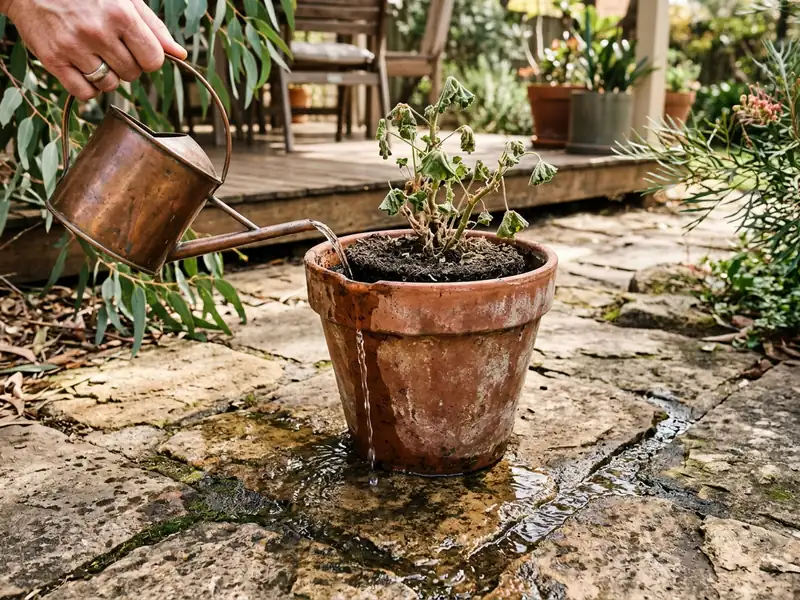
Instead of soaking through the root zone, water may run around the outside of the potting mix and straight out through the drainage holes.
A suitable wetting agent can help the dried mix accept moisture again.
This is particularly useful for pots and hanging baskets exposed to hot weather, although badly deteriorated potting mix may eventually need replacing rather than repeatedly treating.
Before the driest part of the year
You do not have to wait until severe dry patches appear.
Applying an appropriate soil wetter before conditions become very dry can help maintain more consistent water penetration.
Water Corporation recommends applying a soil improver containing a wetting agent at the start of winter and again in early summer, as well as following the manufacturer's directions.
What is the best time to apply soil wetter in Perth?
Early summer is an important time to think about soil wetting in Perth because gardens are heading into the period when reliable moisture penetration matters most.
The beginning of winter is another useful time, particularly where water-repellent soil prevents rainfall from soaking evenly into the ground.
The exact schedule depends on the product.
For example, the Richgro EZI-WET Granulated Soil Soaker stocked by Bibra Lake Soils has a manufacturer recommendation of every 6 to 8 weeks during spring and summer, or as needed, and every 8 to 12 weeks during autumn and winter, or as needed. Richgro recommends treating pots and baskets at the start of spring and autumn.
This is why it is better to follow the directions for the soil wetter you are actually using rather than relying on a universal calendar.
When to apply Richgro EZI-WET through the year
| Use | J | F | M | A | M | J | J | A | S | O | N | D |
|---|---|---|---|---|---|---|---|---|---|---|---|---|
| Lawns and gardens, spring and summerevery 6 to 8 weeks | January: yes | February: yes | March: no | April: no | May: no | June: no | July: no | August: no | September: yes | October: yes | November: yes | December: yes |
| Lawns and gardens, autumn and winterevery 8 to 12 weeks | January: no | February: no | March: yes | April: yes | May: yes | June: yes | July: yes | August: yes | September: no | October: no | November: no | December: no |
| Pots and hanging basketsstart of spring and autumn | January: no | February: no | March: yes | April: no | May: no | June: no | July: no | August: no | September: yes | October: no | November: no | December: no |
| Water Corporation advicestart of winter, early summer | January: no | February: no | March: no | April: no | May: no | June: yes | July: no | August: no | September: no | October: no | November: no | December: yes |
The first three rows are the directions on the Richgro EZI-WET 10 kg bag, which also says "or as needed". The last row is Water Corporation's general advice for soil improvers with a wetting agent.
How do you apply a soil wetter?
Always start with the instructions on the product.
For a granular wetting agent, the general process is straightforward:
- Measure the area you need to treat.
- Work out the required quantity using the product's application rate.
- Spread the granules as evenly as possible.
- Keep granules away from foliage where directed.
- Water the treated area thoroughly.
- Reapply only at the manufacturer's recommended interval.

Applying an uneven amount can create inconsistent results, particularly across larger lawns.
For bigger areas, a fertiliser spreader can make it easier to achieve even coverage.
Applying the product during the cooler part of the day can also make the job easier and is specifically recommended for Richgro EZI-WET.
How much soil wetter do you need?
Application rates vary considerably between products, so always use the rate stated on the package.
Bibra Lake Soils currently stocks Richgro EZI-WET Granulated Soil Soaker in a 10 kg bag. The published rates are:
| Area | Application rate |
|---|---|
| Garden beds | 30 g/m² |
| Lawns | 50 g/m² |
Richgro states that a 10 kg bag can treat up to 300 m². That headline coverage depends on how the product is being used. At the lawn rate of 50 g/m², for example, a 10 kg bag treats about 200 m².
For a simple lawn example:
80 m² lawn × 50 g/m² = 4,000 g
That means an 80 m² lawn would require approximately 4 kg at that product's stated lawn rate.
Work out how much you need
You need about
4.0 kg
10 kg bags
1
Uses the Richgro EZI-WET rates printed on the bag. Other soil wetters use different rates, so check the pack you buy.
For pots and hanging baskets, the bag gives an amount per container instead:
| Pot size | Amount to apply |
|---|---|
| 200 mm | 6 g |
| 250 mm | 9 g |
| 300 mm | 18 g |
| 400 mm | 30 g |
| 500 mm | 60 g |
Measure the area being treated rather than automatically applying wetter across the entire property. If part of the garden already accepts water properly, there may be little benefit in treating it.
Is a soil wetter the same as a soil conditioner?
No.
A soil wetter changes the way water interacts with water-repellent soil. A soil conditioner is used to improve characteristics of the soil itself, depending on what that conditioner contains.
For example, compost-based soil conditioners may add organic matter and improve soil structure, while clay-based soil improvers can change how sandy soil holds water and nutrients.
They can complement each other, but they are not interchangeable.
A useful way to think about it is:
| Product | Main job |
|---|---|
| Soil wetter | Helps water penetrate water-repellent soil |
| Clay soil improver | Helps sandy soil hold water and nutrients |
| Compost or soil conditioner | Adds organic matter and helps improve existing soil |
| Mulch | Helps protect the soil surface and reduce moisture loss |
If water is actively beading and running off, a soil wetter can provide a relatively quick response.
If the bigger problem is that your sandy soil never holds enough moisture or nutrients, you may need to look beyond soil wetter and consider broader soil improvement as well.
Soil wetter or bentonite clay?
They solve related problems in different ways.
A soil wetter primarily helps water enter water-repellent soil. It is useful when you want to improve wetting relatively quickly, but treatment generally needs to be repeated according to the product's directions.
Bentonite clay changes the physical characteristics of sandy soil. Clay particles provide much more surface area than sand and can improve the soil's ability to retain water and nutrients.
For an established lawn or garden with a seasonal water-repellence problem, a soil wetter may be the simpler treatment.
For very sandy ground where poor water and nutrient retention is an ongoing problem, bentonite clay or another clay-based soil improver such as Soil Solver Clay Plus Minerals may form part of a longer-term soil improvement plan.
The two approaches do not necessarily have to be mutually exclusive.
Does soil wetter help soil retain water?
This requires an important distinction.
The main job of a wetting agent is to help water enter and spread through water-repellent soil. That is different from physically increasing how much water the soil can store.
If Perth sand wets properly but then dries very quickly, the bigger issue may be its low water-holding capacity.
In that situation, you may need to consider soil structure, clay content, organic matter and surface protection rather than relying solely on a wetting agent.
This is where other soil improvers, a suitable soil conditioner and mulch can become important parts of the job.
What does the Soil Wetter stocked by Bibra Lake Soils contain?
The Soil Wetter currently stocked at Bibra Lake Soils is Richgro EZI-WET Granulated Soil Soaker.
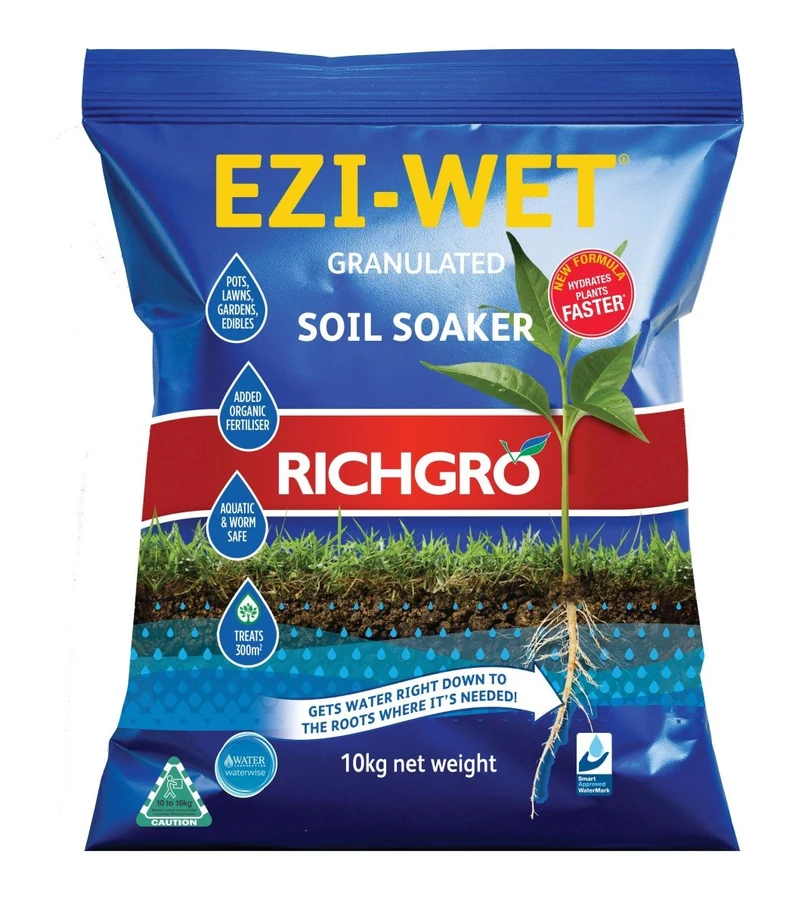
Richgro EZI-WET Granulated Soil Soaker
- 10 kg bag that treats up to 300 m²
- 30 g/m² on gardens, 50 g/m² on lawns
- Can be effective for up to 6 months when used as directed
- Contains Charlie Carp organic fertiliser and bentonite
- Carries the Smart Approved WaterMark and is a WA Waterwise product
Details from the back of the bag.
See the soil wetterThe 10 kg product is designed for lawns, gardens and pots and contains a soil wetting agent with Charlie Carp organic fertiliser and bentonite blended through it. Richgro states that the product can remain effective for up to 6 months when used as directed, although its recommended application schedule for consistent results is more frequent.
The added bentonite is useful, but it should not be confused with carrying out a full clay soil-improvement treatment. Likewise, the added fertiliser does not necessarily replace the normal feeding program required by your lawn or plants.
Richgro also lists the EZI-WET Granulated Soil Soaker as WA Waterwise Approved and Smart Drop Certified.
What won't a soil wetter fix?
Soil wetter is useful, but it should not become the automatic answer to every dry garden.
Sprinkler coverage
It will not compensate for sprinklers that do not reach the area.
Compaction
It will not correct severe soil compaction.
Very sandy soil
It will not turn very sandy soil into moisture-retentive garden soil by itself.
Hungry plants
It will not fix a nutrient deficiency simply because the plant looks stressed.
Drainage
It will not solve poor drainage or waterlogging.
Bare soil in summer
It will not stop soil drying out if the surface is exposed to intense summer conditions without appropriate management.
Before treating an area, work out whether the problem is water entering the soil, water being retained in the soil, irrigation coverage, drainage or something else.
That usually leads to a much better result than simply adding more water or more products.
How can you improve water management in sandy soil long term?
For Perth gardens, soil wetter is often most useful as one part of a wider soil-management approach.
Start by making sure water can enter the soil. If it cannot, a wetting agent may help.
Then consider how well the soil holds that moisture. Very sandy ground may benefit from appropriate clay-based or organic soil improvement.
Protecting the soil surface with a suitable mulch can reduce moisture loss, while good irrigation design helps put the right amount of water where plants can use it.
The aim is not simply to make the ground wet. It is to create a root zone that accepts water, holds an appropriate amount and still drains correctly.
If your soil continually struggles despite repeated applications of wetter, it may be worth looking at how to improve soil quality more broadly rather than continuing to treat the same symptom.
Frequently asked questions about soil wetters
Is soil wetter the same as a wetting agent?
Yes. In home gardening, the terms soil wetter, soil wetting agent and wetting agent are commonly used for products designed to improve water penetration into water-repellent soil.
How quickly does soil wetter work?
A wetting agent begins working as it is watered into the soil, but the exact performance depends on the product, soil conditions and how evenly it has been applied.
If the dry area remains unchanged after correct application and thorough watering, check irrigation coverage and consider whether something other than water repellence is causing the problem.
How often should you apply soil wetter?
There is no single schedule that applies to every product.
Follow the manufacturer's directions. Richgro recommends applying EZI-WET to gardens and lawns every 6 to 8 weeks during spring and summer and every 8 to 12 weeks during autumn and winter, or as needed.
Should you water before or after applying soil wetter?
Follow the individual product directions. Granular Richgro EZI-WET is spread over the area and then watered in thoroughly.
Can you use soil wetter on lawns?
Yes, provided the product is labelled for lawn use.
A wetting agent can be particularly useful for lawn areas where water-repellent soil is contributing to persistent dry patches.
Can you use soil wetter in garden beds?
Yes. Soil wetters are commonly used where garden soil beads or sheds water rather than accepting it evenly.
Make sure the product is suitable for the plants and application, and use the manufacturer's stated rate.
Can soil wetter be used in pots?
Many wetting agents can be used in pots and hanging baskets.
This can help when dried potting mix has become difficult to re-wet and water runs around the outside of the root ball instead of soaking through it.
Check the label because application rates for containers differ from lawns and garden beds.
Can you use too much soil wetter?
Yes. More product is not automatically better.
Follow the stated application rate. Overapplying wastes product and may go beyond the way the manufacturer has designed and tested it to be used.
Is soil wetter a fertiliser?
Not normally. Its primary job is improving how water wets the soil.
Some products include additional ingredients. The Richgro EZI-WET Granulated Soil Soaker stocked by Bibra Lake Soils contains Charlie Carp organic fertiliser and bentonite, but it should still be treated primarily as a soil wetter rather than a complete fertilising program.
Is a soil wetter a permanent fix?
Usually not.
Most wetting agents gradually lose their effect and need to be reapplied according to the manufacturer's instructions. If severe water repellence keeps returning, consider whether longer-term soil improvement is needed as well.
Need help working out what your soil needs?
Water running off the surface does not always mean you need more irrigation. Sometimes the soil simply is not accepting the water you are already giving it.
If you are dealing with dry patches, water-repellent sand or garden beds that will not wet evenly, visit the Bibra Lake Soils yard and tell us what the soil is doing. We can help you compare soil wetter, clay-based products and other soil improvers so you can choose the right option for the job.
Bibra Lake Soils is at 222 Barrington Street, Bibra Lake and is open seven days a week. Check current product availability before heading in.