
Plant Food Perth
Feed what you are actually growing.
Rose and flower food, and fruit and citrus food. A general fertiliser is a compromise between the two, these are the targeted ones, high analysis and fast acting, with iron through them for leaf colour.
Both are built for hungry, fast-growing plants, which is exactly why neither belongs anywhere near an Australian native. We are between native feeds at the moment, so if that is what you are after, talk to us in the yard before you buy anything.
Or call the yard on (08) 9434 2290
- Open 7 days
- Per-plant feeding rates
- Bagged, fits in a boot
- Bibra Lake yard

Plant food range
Three foods, three different plants
Showing 2 of 2
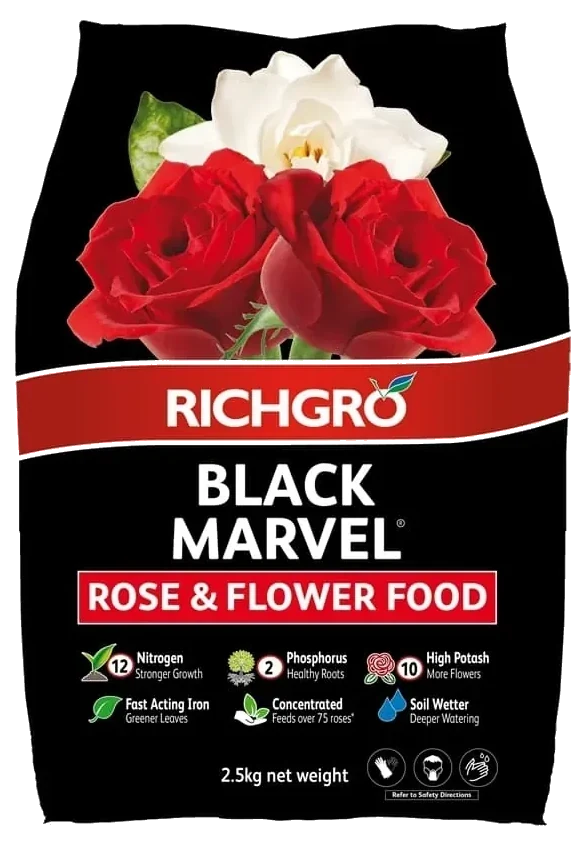
Black Marvel Rose & Flower Food
NPK 12:2:10 with iron and a soil wetter. Per-plant rates, so it is an easy one to get right.
- Best for:
- Roses and flowering plants
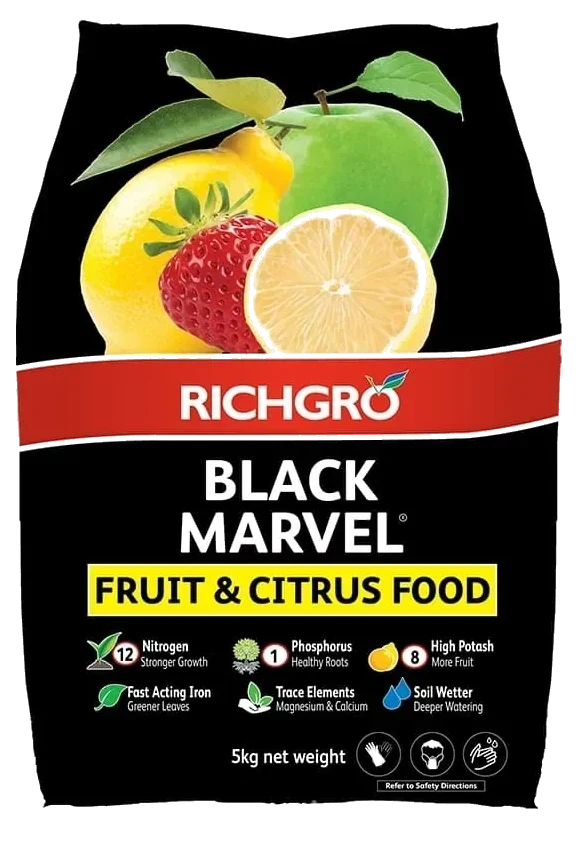
Black Marvel Fruit & Citrus Food
NPK 12:1:8 with iron and potash, for citrus, apples, pears and stone fruit alike.
- Best for:
- Citrus and backyard fruit trees
How much plant food do you need?
By the plant, not by the metre
These are concentrated feeds applied plant by plant, so the useful number is how many plants a bag does rather than how many square metres it covers.
We stock both in 10kg bags. Spread to the drip line, keep the granules 10cm off the base, water in, and never put them on the leaves.

| Product | Bag | What it feeds |
|---|---|---|
| Black Marvel Rose & Flower Food | 10kg | Over 300 established roses, at 30g each. Half that rate for miniatures and anything in a pot. |
| Black Marvel Fruit & Citrus Food | 10kg | About 200m², at 50g/m² out to the drip line. |
| Banksias, grevilleas, hakeas | - | Neither of these. Both are high phosphorus and phosphorus is what kills proteaceae. Come and talk to us before you feed a native. |
Apply roses two to three weeks after pruning, then every four to eight weeks until winter. Fruit and citrus every six to eight weeks through the growing season. Not in the middle of a hot day.
How to choose a plant food
Four things that actually decide it
Phosphorus, and what it kills
Phosphorus is the nutrient that gives Australian natives trouble, and the 1 in the middle of 6:1:1 is the whole reason the native food exists. Low phosphorus is not no phosphorus, so banksias, grevilleas, hakeas and waratahs still want the lower end of the rate.
Per plant, or per square metre
The rose food is dosed per plant, 30 grams for an established in-ground rose, 10 for a new or bare-rooted one. The citrus and native foods are dosed per square metre. Knowing which you are working in stops you overfeeding by a factor of ten.
Keep it off the leaves
These are granular feeds and they burn foliage if they sit on it. Spread out to the drip line, no closer than 10cm to the base, wash any strays off the leaves, and water in. Not in the middle of a hot day.
Timing beats quantity
Roses start two to three weeks after pruning then every four to eight weeks until winter. Citrus go every six to eight weeks through the growing season. Natives get spring and autumn and nothing in between, there is no benefit to a third feed.




Find the right plant food
Tell us what you are feeding
Tap any job below and the range above filters itself to what suits it.
Compare our plant foods
Side by side, and why you would pick each
| Product | Best for | Main characteristic | Choose this when |
|---|---|---|---|
| Black Marvel Rose & Flower Food | Roses and flowering plants | NPK 12:2:10, added iron, soil wetter | You want flowering and leaf colour, and you would rather feed by the plant than by the square metre. |
| Black Marvel Fruit & Citrus Food | Citrus and backyard fruit trees | NPK 12:1:8, iron, potash, magnesium and calcium | You are feeding citrus every six to eight weeks, or fruit trees at bud and again at ripening. |
Plant food pickup
Collect it from the yard
Collect from the yard
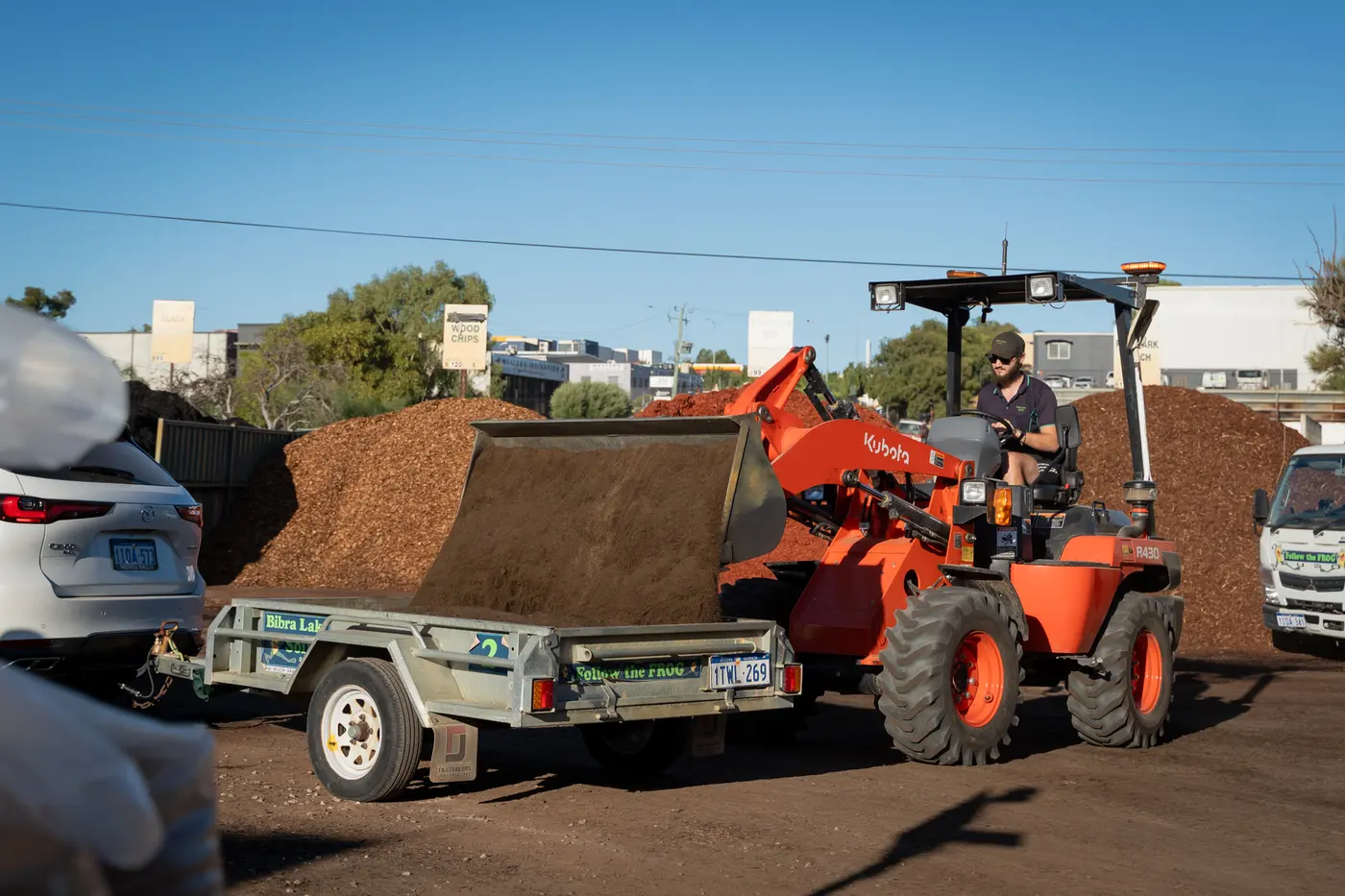
Open seven days at 222 Barrington St, Bibra Lake. The loader puts it straight into your trailer or ute, and someone will tell you whether what you have brought will carry the load you are asking for.

Delivering bags
We do not usually deliver bags on their own. They go straight in a boot, so collecting is quicker and cheaper for you. If a bulk load is already coming to you, ask the yard whether the bags can go on the same truck.

Cart your bags home free
Borrow one of ours for two hours
Borrow one of our trailers free for two hours to get your load home. No charge, no bond.
- Yard to your home only, no tip trips
- Two hours, no overnight use
- Back 30 minutes before we close, whatever the two hours says
- Bookings not accepted, first in best dressed
Customer feedback
What people say after they have used it
Plant food FAQs
What we get asked at the counter
Get a plant food quote
Tell us what you are feeding
Tell us what you need and we will check it is on the pallet before you drive down. If you are not sure which plant food you need, describe the job and we will tell you.
Or ring the yard on (08) 9434 2290